03
Aftertaste
2026 · Playlist engine · On view
- Role
- Author — design, engineering
- Medium
- Playlist engine
- Status
- On view
- Year
- 2026
A playlist is usually built from what a song is: its genre, its year, who else listened to it. Aftertaste is built from what a song leaves behind.
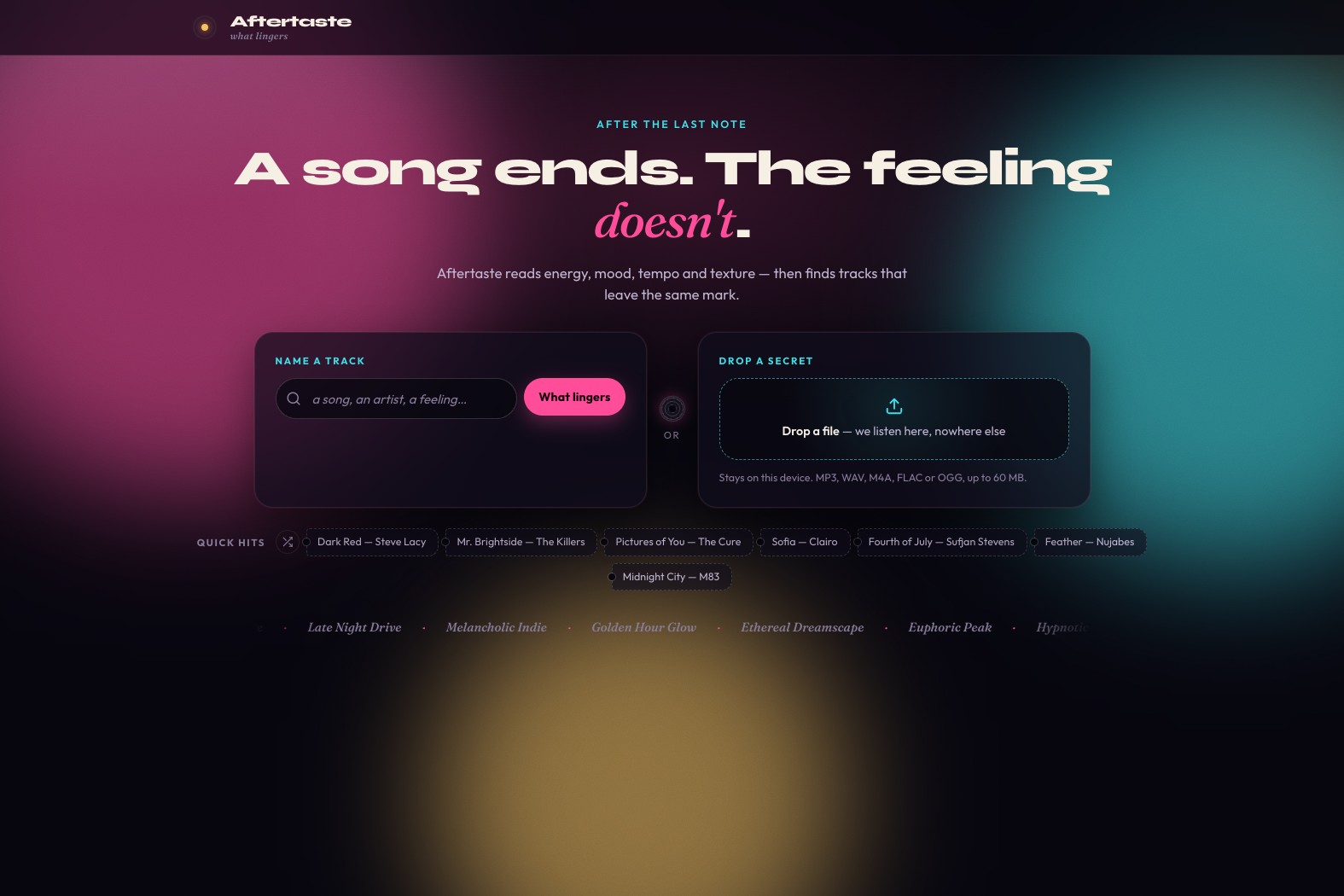
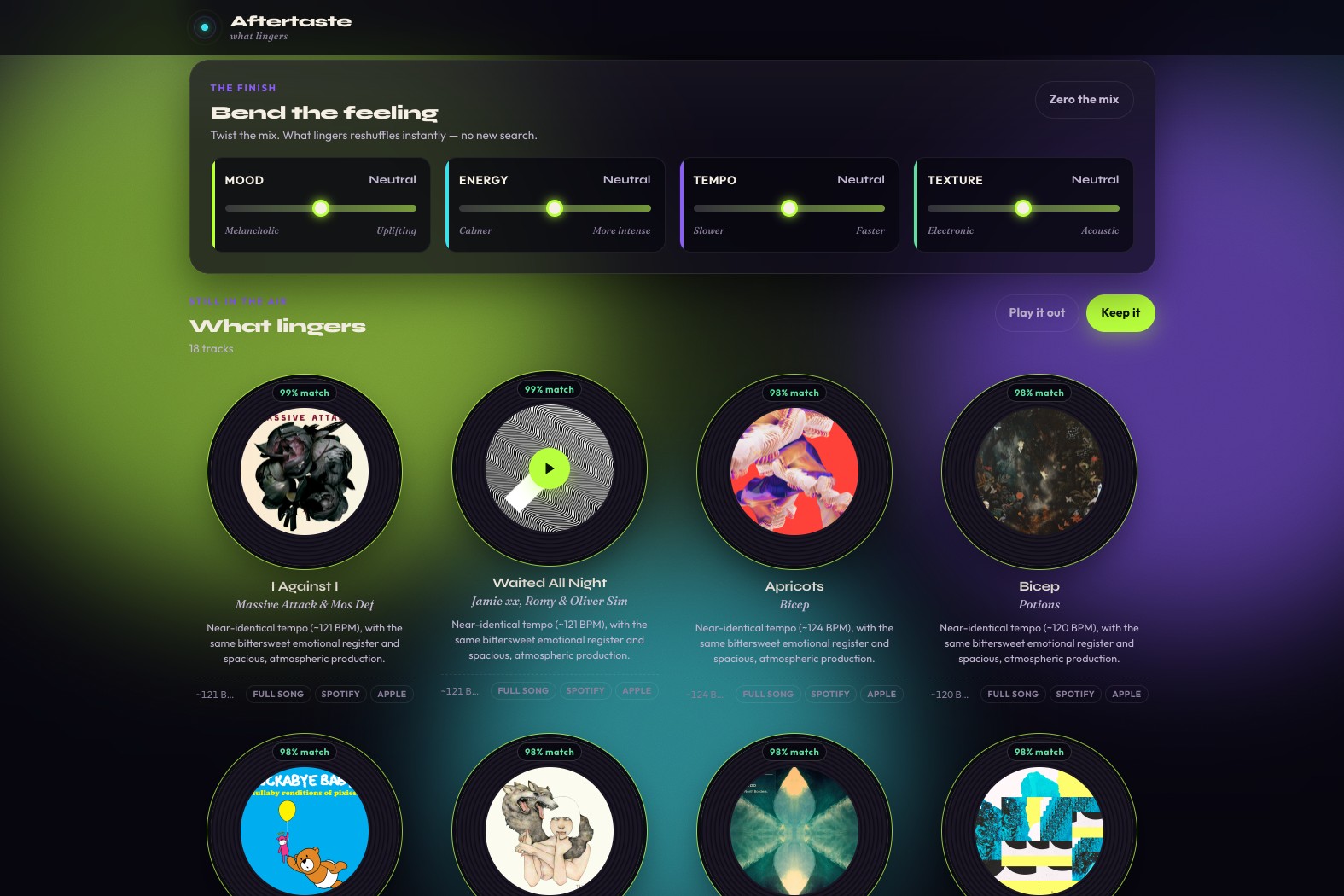
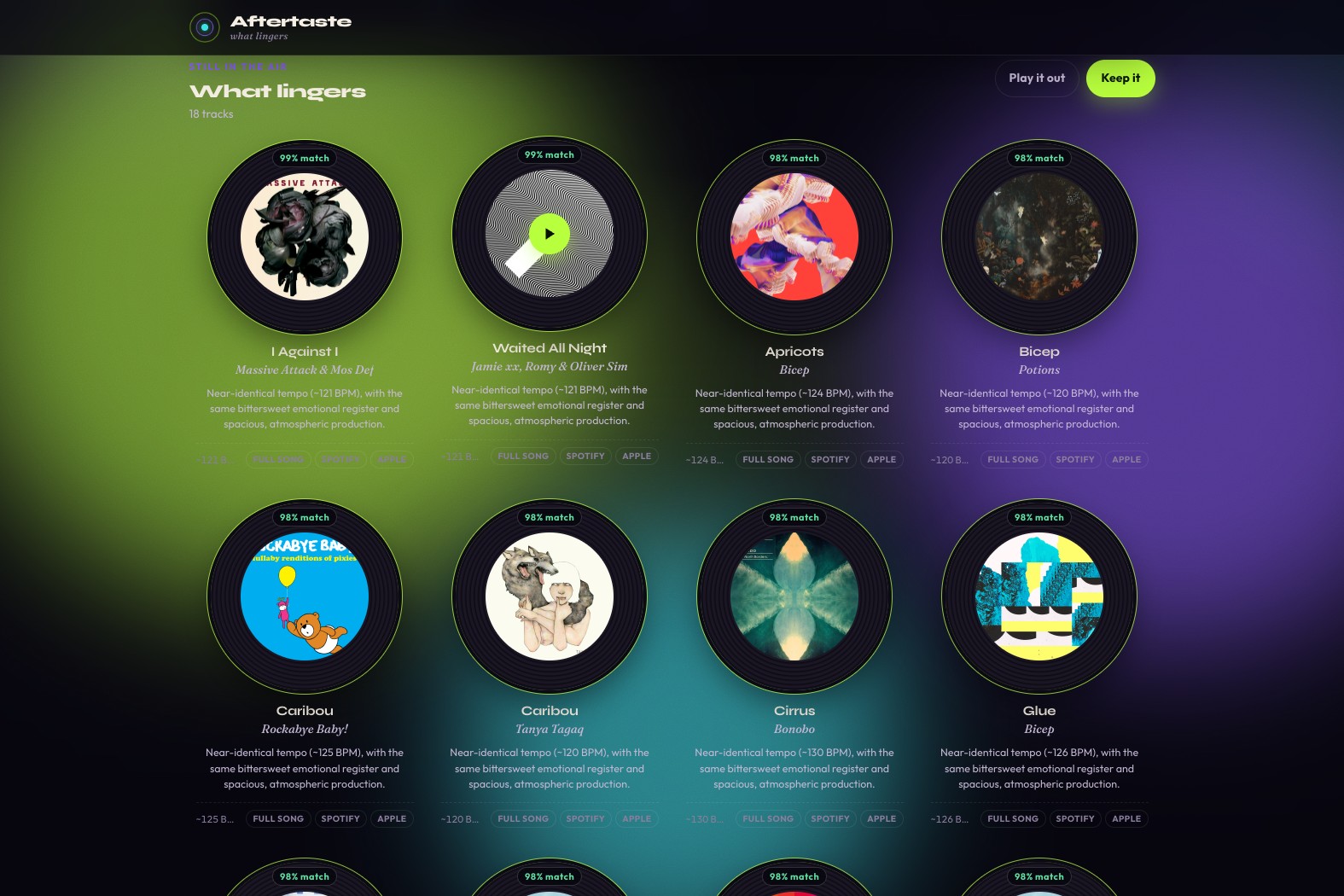
Name a track, or drop an audio file. The file is analysed in the browser with the Web Audio API — onset-based tempo, energy, brightness, acousticness — and never leaves the device. The seed becomes a five-dimensional profile matched to one of twelve archetypes, and candidate tracks are ranked by their distance from it, three per artist at most, each with a line saying why it made the cut.
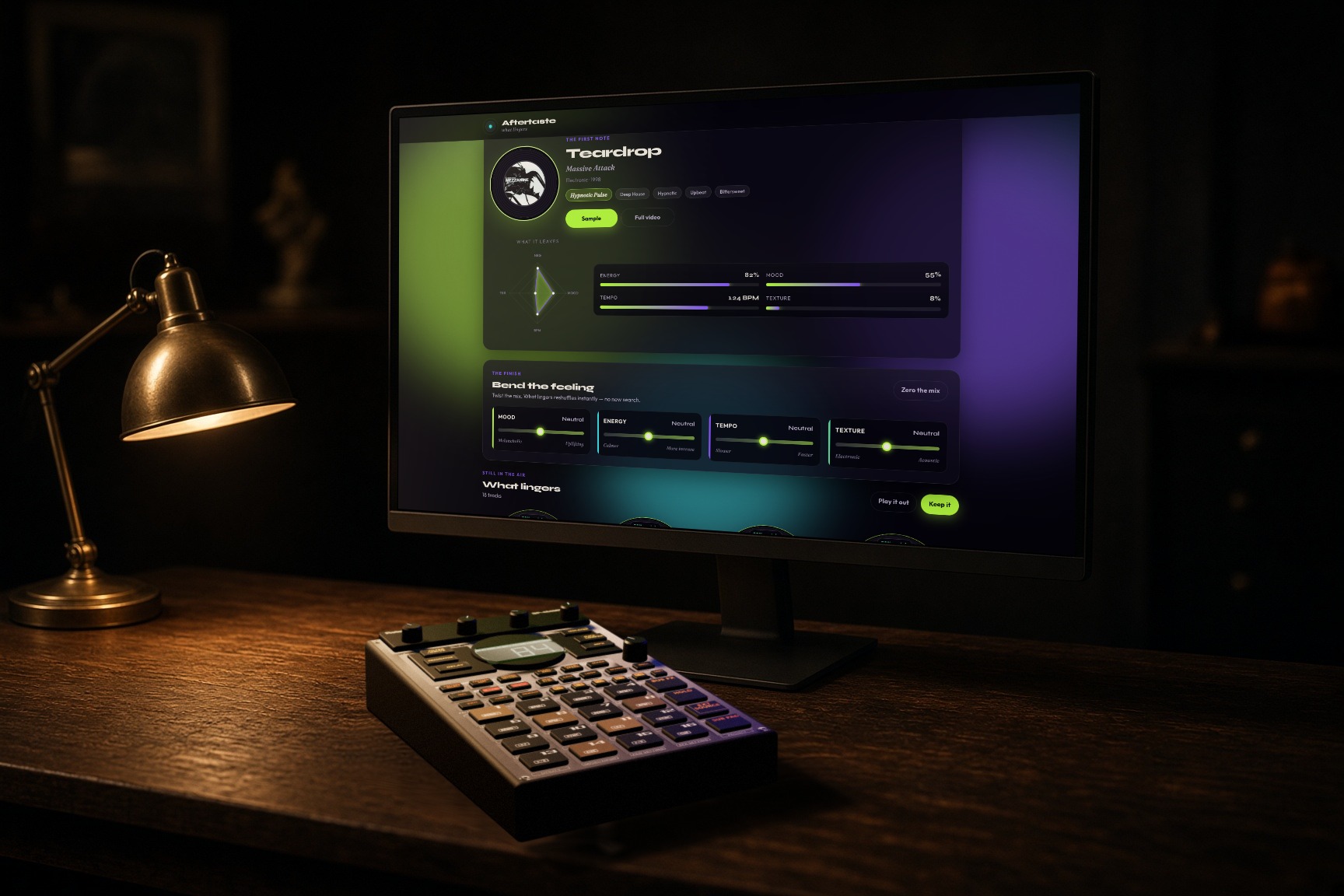
Four sliders bend the target and re-rank instantly. Thirty-second previews play in a keyboard-accessible player; the full track opens on YouTube, Spotify or Apple Music. Keep it as a track list, an M3U, a CSV, or a link that restores the seed. A static site: no build step, no dependencies, no account.
Stack
- JavaScript
- Web Audio API
- iTunes Search API
- Deezer API
From the work